What changes when we choose to see a person before we see their circumstances?
Every person we encounter carries a story we cannot fully see. The person struggling financially may once have enjoyed stability. The student falling behind may be carrying responsibilities no child should have to carry alone. The older adult sitting quietly may have spent decades caring for others. And the person asking for help may have spent most of their life being the one others depended upon.
Circumstances tell us something about a person’s present situation. They do not tell us the value of the person.
At Every Voice Matters Foundation, this distinction is fundamental to how we hope to serve. Our first commitment is simple: Protect Human Dignity. Living that commitment, however, requires more than treating people politely. It requires us to change the way we see one another.
Dignity Is Not Something We Give
We sometimes speak about “giving people dignity,” but dignity is not ours to give. Every person already possesses it.
Human worth does not increase with income, education, professional achievement, influence, health, age, or social status. Nor does it disappear when someone experiences hardship. A person who needs assistance today has exactly the same human worth they had yesterday.
Someone experiencing homelessness is still someone’s child, parent, sibling, friend, or neighbor. Someone without a job still possesses talents, experiences, aspirations, and potential. Someone who has made mistakes is still more than the worst decision they have ever made.
Protecting human dignity begins when we stop defining people by a single circumstance.
Seeing the Person First
Organizations can unintentionally reduce people to categories: a client, a recipient, a case, a beneficiary, a population. These terms may sometimes be necessary for administration or measurement, but they should never become the way we see people.
Behind every statistic is a human being. Behind every application is a story. Behind every request for assistance is a person who deserves the same respect we would want for ourselves or someone we love.
That leads to a question we want to carry throughout the work of Every Voice Matters Foundation:
“Are we seeing the person before we see the circumstance?“
That question changes how we approach service. Instead of beginning with what is wrong, we can begin by understanding who is in front of us—their strengths, experiences, hopes, choices, and aspirations.
Sometimes Dignity Looks Like Listening
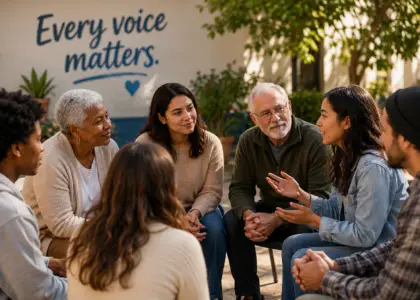
Protecting dignity does not always require a large program. Sometimes it begins with something remarkably simple: listening.
Not listening merely so we can respond or explain what someone should do, but listening because another person’s experience deserves our attention. There is something powerful about being able to tell your story without immediately being judged, corrected, categorized, or dismissed.
Genuine listening communicates something important: I see you. I respect your experience. What you have to say matters.
That is one reason listening sits so close to the heart of Every Voice Matters Foundation. Before we can understand how to serve people well, we have to be willing to hear them.
Help Should Never Humiliate
The way assistance is offered matters just as much as the assistance itself.
A program can provide something valuable while unintentionally making the person receiving it feel embarrassed, powerless, or inferior. That is why we want to challenge ourselves to think differently about service.
Can assistance provide meaningful choices? Can people participate in decisions affecting them? Can programs recognize strengths rather than focusing exclusively on needs? Can someone receive help without being made to feel smaller because they needed it?
Our measure of service should never simply be, “Did we provide assistance?” We should also ask, “How did the person experience that assistance?”
The answer tells us something important about whether dignity was truly protected.
Dignity Changes the Relationship
Traditional models of service can sometimes create two groups: those who help and those who are helped. Real communities are more complicated—and more beautiful—than that.
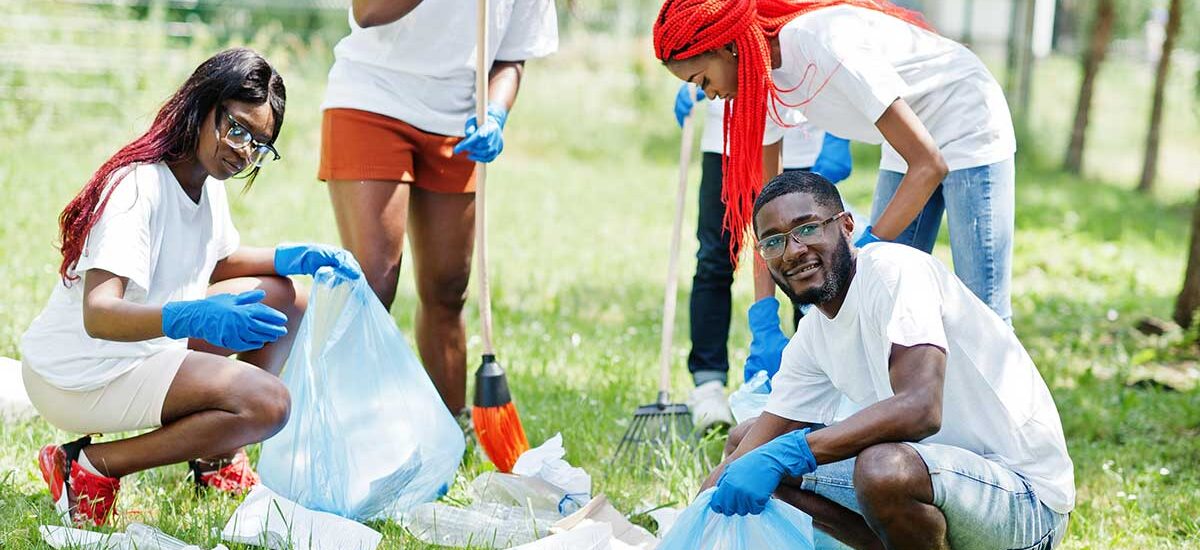
The person receiving support today may become the mentor tomorrow. The volunteer serving today may someday need someone else to stand beside them. The student receiving an opportunity may eventually create opportunities for hundreds of others.
Life changes. Roles change. Circumstances change. Human dignity does not.
When we recognize that truth, service becomes less about one person rescuing another and more about people walking alongside one another. Everyone brings something to the relationship, and everyone has something to learn.
Respecting Choice
Protecting dignity also means respecting people’s ability to make decisions about their own lives.
We can offer opportunities, provide information, remove barriers, encourage someone, and walk beside them. But we should be careful about assuming that we always know what is best for another person.
People deserve agency. They deserve choices. They deserve the opportunity to participate meaningfully in decisions affecting their lives.
Sometimes the most respectful question we can ask is not, “Here’s what we can do for you.” It is:
“What would be helpful to you?”
It is a small change in language, but it represents a much larger change in perspective. One approach assumes. The other listens.
The Everyday Practice of Dignity
Human dignity is not something only nonprofit organizations need to think about. Each of us encounters opportunities to protect it every day.
We protect dignity when we learn someone’s name, listen without checking our phone, include someone who seems left out, speak respectfully about someone who isn’t in the room, refuse to make assumptions based on appearance, or allow someone to ask for help without making them feel ashamed.
These moments rarely make headlines, but they shape the culture of our families, workplaces, schools, organizations, and communities. Over time, small acts of respect create environments where people know they are valued.
That is how dignity moves from being an idea to becoming a way of life.
The Kind of Foundation We Hope to Become
As Every Voice Matters Foundation grows, there may eventually be programs, partnerships, volunteers, leaders, and systems. Those things will matter, but something else will matter even more: how people feel when they encounter us.
Do they feel respected and heard? Do they feel their experiences matter? Do they feel they have choices? Do they leave an interaction with more confidence rather than less? Do they understand that needing support never made them less worthy?
Those questions should remain with us regardless of how much the Foundation grows.
Protecting human dignity cannot simply become one of our programs. It must become part of our character.
Start With the Person
The circumstances surrounding someone’s life can change quickly. Employment can disappear. Health can change. Families can encounter hardship. New opportunities can emerge unexpectedly.
Life reminds us repeatedly that circumstances are temporary. Human worth is not.
So the next time we encounter someone whose circumstances are very different from our own, perhaps we can begin somewhere simple: before deciding who they are, listen. Before assuming what they need, ask. Before seeing the circumstance, see the person.
Because every person carries something no circumstance can take away: their inherent human dignity.
And protecting that dignity is where meaningful service begins.